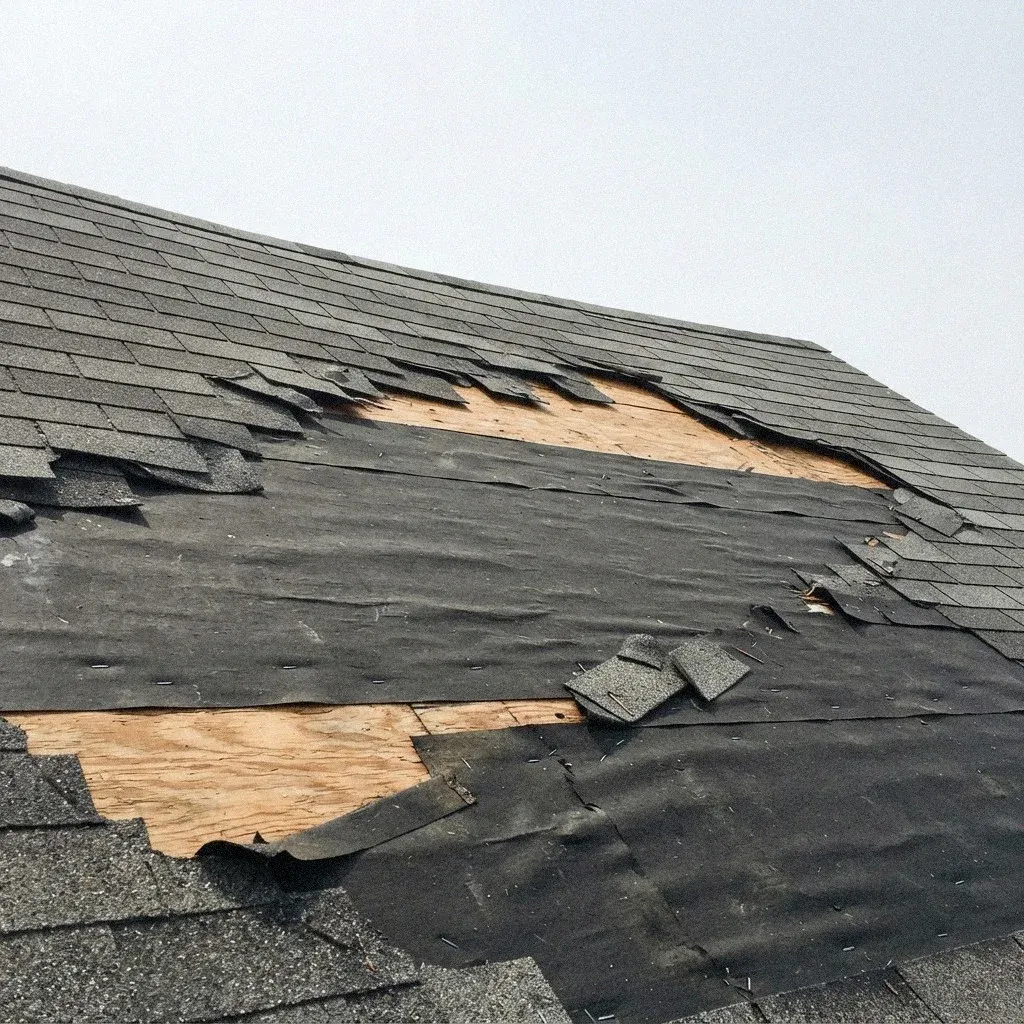
Trenton Roof Leak Repair for Decking Damage
In Trenton, roof decking repair ties the damaged roof surface to the entry point, including homes near Colonial Lake Park and Assunpink Creek.
Decking damage can extend beyond the visible stain, so the repair area should be based on what the opened roof reveals. The same repair scope should identify and fix the roof component that admitted water, protecting the new panel from the source.
Assess Decking for Roof Leak Repair
A homeowner can photograph a leak-damaged roof deck from a safe vantage point, but should stop before stepping onto a wet or steep roof. In Trenton, the deck supports the roof covering, so softened or broken wood can affect how that covering is held in place. Repair starts by recording the damaged area and its relation to the water entry point. That connection matters: replacing wood while leaving the opening that admitted water unrepaired can expose the new panel to the same problem.
The repair scope depends on whether the wood is still able to hold fasteners and carry the covering. A roofer may compare damp areas with dry ones and check for swelling, softness, crumbling, or layers separating. A moisture reading can add context, but the decision also depends on the panel’s physical condition. Around Cadwalader Park, as elsewhere in Trenton, a written record of what was measured and observed helps an owner understand why a section is marked for replacement or left in place.
The visible water mark indoors does not set the cut line. Water may reach the ceiling after moving along the deck or framing, while some stained wood remains firm and usable. The roofer should show where the leak-damaged roof deck loses its ability to support the covering and where intact material begins. In Trenton, ask for the proposed removal outline to be photographed before work starts, with enough surrounding roof context to connect that boundary to the affected area.
Set Roof Leak Repair Limits
The roof opening has to reach both the damaged wood and the component that let water in. Once the covering above the area is moved, the roofer can expose the deck, document its condition, and trace the repair scope to the entry point. A finding near Assunpink Creek is not evidence of a particular cause; the property itself must be inspected. Ask which roof component is being repaired and how that work will stop water from reaching the replacement panel.
During removal, the roofer needs to preserve a sound place for the replacement panel to attach. A cut that leaves a narrow, unsupported strip can make the edge difficult to secure, so the removal plan should account for the framing and panel joints beneath the covering. Ask which edges will rest on framing and what will support any edge that does not. Photos taken as the old wood comes out can show whether the final opening followed the documented boundary.
Before approving the scope, an owner can ask what the leak inspection includes, what evidence links the damaged deck to the entry point, and what could expand the work. The answer may depend on how much roof covering must be lifted, how the deck meets its supports, and what becomes visible inside the opening. For a Trenton property, request those findings in writing alongside the proposed repair, so the decking work and water-entry repair can be reviewed as one connected scope.
Tie Deck Repair to Leak Repair
Replacement wood should suit the existing roof assembly and meet the surrounding surface without a raised or sunken edge. Its fasteners need to hold in adequate support, and the panel should leave a stable base for the covering to be put back. Ask the roofer to note the replacement material, its thickness if known, and how its edges will be secured. That record makes the roof decking repair easier to compare with the exposed opening documented before installation.
With the deck exposed, the framing below it can be checked before the opening is closed. Signs of deterioration or a damaged support may mean the new panel would lack a reliable attachment point; that concern should be recorded and explained before the work continues. In a Trenton home near Mill Hill Park or elsewhere in the city, ask whether the inspection found an issue beyond the decking and whether the proposed scope addresses it. The owner should know what remains outside the repair.
Document Roof Leak Repair Work
In Trenton, roof decking is the panel layer that gives roofing a firm base; once it loses strength, fasteners may no longer hold the covering securely. During roof-decking repair, the pros we connect you with can record which exposed panels remain firm and which show softness, swelling, or crumbling around their support points. That distinction helps set a sound cut line instead of removing material by appearance alone. A secure repair also depends on the new panel meeting the remaining deck without leaving a loose edge beneath the roof covering.
In Trenton, moisture checks and a close look at panel edges help distinguish surface dampness from decking that has lost its strength. The replacement boundary should extend to material that can hold the roof assembly securely; leaving weakened sections can compromise the new work. Near Assunpink Creek, as elsewhere in the city, the roofer also needs to correct the roof component admitting water before closing the opening. Otherwise, replacement decking may be exposed to the same source again.
Roof Leak Repair Scope Notes
- Photograph the deck before removal, with the proposed cut line and enough surrounding roof visible to locate the affected area.
- Ask the estimate to name the water-entry component and describe how its repair connects to the decking replacement.
- Record what supports each replacement-panel edge and whether any exposed framing concern changes the scope.
- Compare the panel’s moisture and firmness with adjacent decking, recording where discoloration or loss of strength changes across the affected area.
- Mark the proposed removal area against the roof framing, noting how replacement decking will be secured and where its edges will land.
- Identify the roof component tied to the damaged panel and include how its repair will reconnect with the restored deck.
What Owners Ask About Leaks
How do roofers judge whether leak-damaged decking needs replacement?
The roofer documents the exposed deck, removes wood that cannot provide a secure base, and installs replacement material with supported, fastened edges. The opening also allows the water entry component to be identified and repaired as part of the same scope. Ask for photos of the damage, the opening, and the completed panel, plus a note connecting the entry repair to the decking work.
How is the removal area chosen for damaged roof decking?
The removal boundary follows the condition of the wood and the support available for replacement edges. A ceiling mark alone cannot show how far damage reaches: some discolored deck may remain firm, while damage may extend beyond the visible indoor mark. Ask the roofer to document the proposed cut line and explain how each new panel edge will be secured before the roof is closed.
How does the leak source connect to replacement decking?
The roofer opens the roof above the affected deck, checks whether the panel and its supports remain sound, then removes weakened sections back to firm material. Replacement decking is fastened to the supports, and the roof component that allowed water in is repaired before the covering goes back. In Trenton, the amount of decking involved depends on what the opening reveals; a home near Colonial Lake Park cannot be assessed from its location alone.
Ask how the decking and leak repair connect
Share photos and the inspection notes with the pros we connect you with, then ask how the decking work and leak-source repair fit together.
Call (609) 934-1587