Availability varies — call to confirm. · (609) 934-1587
Roof-to-Wall Flashing Repair in Trenton, NJ
Sidewall Leak Repair

Trenton Roof Leak Repair at Wall Transitions

Rain can reveal a weak junction, while snow and freezing conditions may keep adjoining materials wet or stiff. Trenton’s climate records document local precipitation; note when moisture appears as weather changes and have recurring signs assessed.

SEASONAL UPKEEP

An inspection compares indoor moisture clues with the flashing and wall layers to locate the supported entry path. The inspection also considers nearby roof faults, since water can travel before appearing indoors.

INDOOR WARNING SIGNS

Signs a Roof Leak May Be Developing

New discoloration indoors can lead a homeowner to ask where the moisture is coming from.

Paint blisters appear beside the roof-to-wall seam

A damp line where a sloped ceiling reaches an outside wall can fit a leak at the roof-to-wall connection. Water may follow framing before reaching the finish, so the mark’s position is a clue rather than a map of the opening. Note when it appears and have the junction and nearby roof area assessed.

Near Cadwalader Park, trim softens where siding meets shingles.

Paint lifting or forming bubbles near an upper wall suggests moisture has affected the finish from behind. That can follow a break at the roof transition, but a nearby roof defect can produce similar evidence. Photograph the change and note whether it grows after wet weather; a roofer can compare it with the wall and roof layers.

By Assunpink Creek, attic wood shows a narrow brown trail.

A musty smell around an upstairs exterior wall may point to material that has remained damp out of sight, even if no drip is present. It does not identify the source by itself. Note the room and when the odor is strongest, then ask for an inspection of the adjoining roof junction and accessible attic evidence.

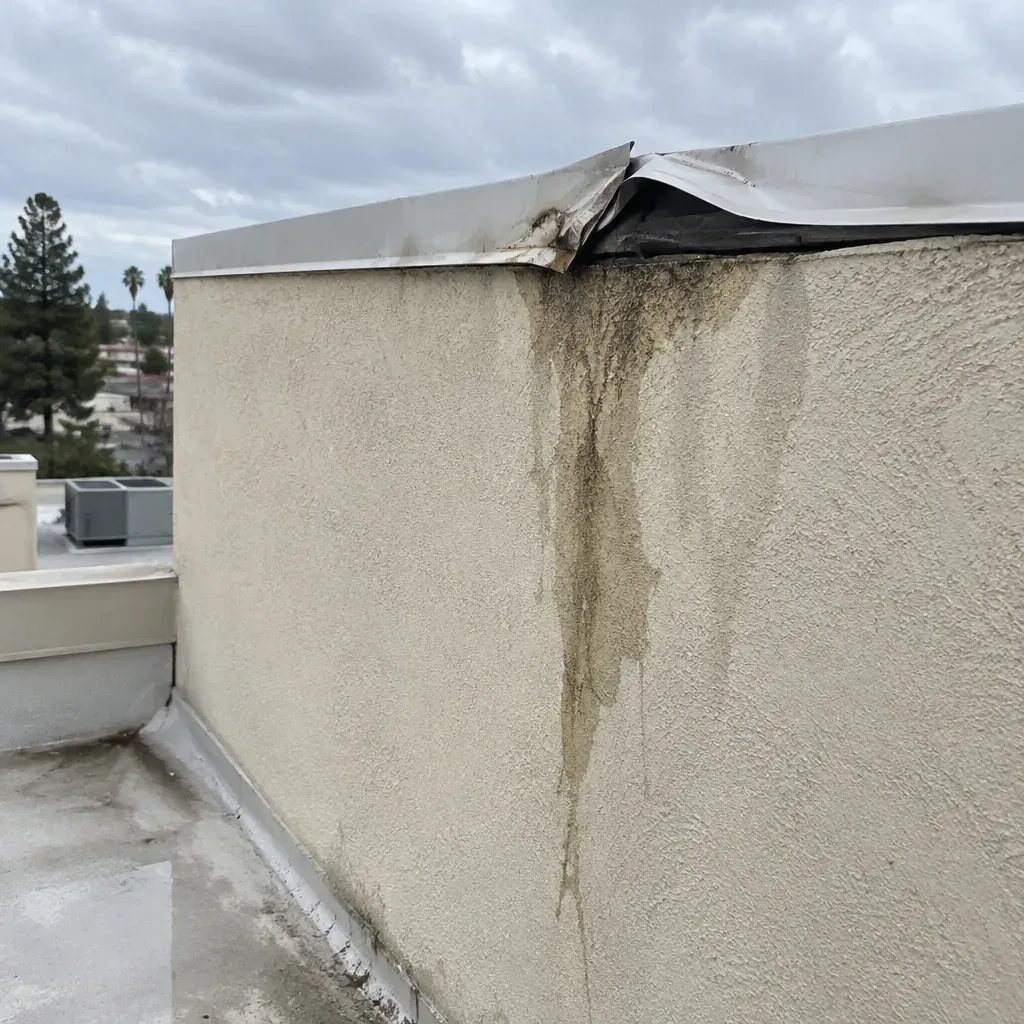
A metal edge pulls loose from the wall near the roof.

Moisture that appears during wind-driven rain can indicate water is reaching a vulnerable wall-side roof edge from an unusual direction. The timing helps describe the conditions, but does not prove which layer has failed. Record the weather and the affected wall, then ask the roofer to assess the transition and nearby surfaces.

Shingle edges darken along the side of a dormer.

Darkened wood or damp insulation near an outside wall in the attic suggests water has reached the roof structure. The trail may lead from the junction or from another nearby area, so avoid disturbing insulation or entering an unsafe attic. Share the location with the roofer and request a check of the corresponding exterior roof section.

Matching Repairs to Roof Damage

Trenton climate records include precipitation, and the local weather can bring rain, snow, and freezing conditions. Repeated wetting or freeze conditions can expose a weak roof-to-wall connection, though only a property inspection can establish the cause. Older housing is documented in parts of 08609, but that does not establish any individual roof’s age or condition.

A roof inspection may serve a homeowner near Old Barracks Museum, Mill Hill Park, or along U.S. Route 206. These landmarks help describe the Trenton service area; they do not indicate a particular home’s roof design, materials, or leak history. The junction and adjoining layers need assessment at the property.

Some inquiries come from within Trenton; others start farther across Mercer. Since coverage is set by address rather than a broad area label, ask the pros we connect you with to check the home’s location before planning service.

Matching Repair to Inspection Findings

Interior Trace
Step flashing is placed between roof courses beside a wall so runoff can pass downhill without pooling at the junction.
Cladding Layers
Water may travel along framing before a ceiling or wall surface shows where it entered.
Flashing Layout
Water may follow framing from a roof junction before showing on an interior wall or ceiling.
Water Route
Attic evidence and the exterior seam help distinguish a transition failure from a nearby roof opening.
Repair Limits
Trenton weather records include precipitation; a property inspection is needed to identify a particular leak source.
INDOOR TRIAGE
Rain can reveal a weak junction, while snow and freezing conditions may keep adjoining materials wet or stiff. Trenton’s climate records document local precipitation; note when moisture appears as weather changes and have recurring signs assessed.
SPECIALTY PARTS
an estimated $350–$900

Tracing a Roof Leak’s Hidden Route

Roof-edge leak. Both can leave water near an upper wall or ceiling, but a roof-edge leak starts at the outer eave while a transition leak centers on the junction where the sloped roof meets a wall. Compare the damp area with the roof section above it and any visible attic trail. Moisture leading toward the wall junction supports checking that transition; evidence beginning farther out on the roof points attention to the surrounding field. A roofer weighs both locations before choosing where to open materials.

Tracing Water During Roof Leak Repair

The roofer uses the moisture record to select the corresponding wall-side roof area, then checks accessible attic evidence and the exterior junction. They examine roof courses, flashing, cladding, and visible water-resistive layers for breaks or poor overlap, while considering nearby roof faults that could explain the trail.

The roofer records which layers show damage to guide the repair scope. They replace failed transition materials, restore how the roof courses and wall layers overlap, and replace any damaged adjoining material included in the scope. The roofer then closes the assembly and explains what the inspection found.

Consider ongoing service only when the inspection gives a reason for it, such as several roof areas needing attention or a source that cannot yet be traced. If the evidence points to one repairable fault and the surrounding roof is sound, a return plan may add little.

WHAT VISIBLE DAMAGE MEANS FOR REPAIR OR WATCHFULNESS
Reported Symptoms Work for Damaged Components
Single roof failure with origin pinpointedEntry-path tracing
Recurring water entry following completed workAttic evidence review
Leak signs span multiple roof sectionsJoints closed, loose roof covering refastened

Knowing When Roof Leak Repair Needs a Roofer

From indoors, write down the room, wall, and timing of each damp mark; take photos and move belongings if the area is safe. From the ground, note the roof slope above it. Keep clear of wet electrical fixtures and sagging surfaces. Do not climb up, pull siding, or remove roofing; leave access and repair work to a roofer.

Knowing When Roof Access Is Unsafe

Water near a wall can reach concealed framing or wiring, while soaked ceiling material may weaken and sag. Keep people clear of bulging surfaces and wet outlets, switches, or fixtures; do not touch or test electrical equipment in a damp area. If water is actively entering, move belongings only where safe and contain drips away from electricity while arranging an inspection.

How Is Roof Leak Repair Cost Put Together?

Ask the pros we connect you with to trace the water’s route; the entry point and affected materials determine what repair belongs in the estimate.In Trenton, the estimate band concerns work on the roof area inspection links to the leak; unrelated upkeep and damage outside that repair fall beyond it. A ceiling mark near Sayen Gardens or Veterans Park can sit apart from the entry point, so tracing the water may change which work belongs in scope. Ask the pros we connect you with to state the inspection charge and written repair limits directly.For complete repair ranges and cost drivers, open the pricing guide.
ROOF ENTRY POINTS

Sealing Roof-to-Wall Transitions

Ridge Cap Leak Repair

Trenton Roof Repair. Loose ridge caps may shift when fasteners no longer hold, while…

ROOF LEAK HELP

What Owners Ask About Leaks

How does a roofer trace moisture at a roof-to-wall seam?

A roofer starts with the indoor moisture record, then checks the roof-to-wall junction and the framing or attic area that may show the water’s route. Moisture marks indoors can help show how far water traveled after entering the roof assembly. In Trenton, the findings help distinguish a failed transition from a nearby roof fault before the roofer chooses which materials to open and repair.

What layers protect the roof where it meets a sidewall?

At the sidewall, step flashing is woven between roof courses to guide runoff downhill. A gap or lifted edge can leave a path for water to reach the framing. In Trenton, a roofer checks whether those layers still direct water outward and whether the evidence points to the junction or another nearby roof area. The arrangement varies by building, so the visible siding alone cannot show what lies behind it.

What does a roofer inspect when water appears near an upper wall?

Record which room or wall becomes damp, when it happens, and whether the mark changes after rain or snow. Contact a roofer when moisture returns, spreads, or is accompanied by an active drip; hidden framing can stay wet after the surface dries. In Trenton, share those observations and ask for an assessment of the roof-to-wall connection and adjoining materials. Keep people away from sagging surfaces or wet electrical fixtures.

What can expand the repair beyond a visible wall-joint leak?

A homeowner can note where moisture appears indoors and leave roof access to a roofer, especially when surfaces are wet or steep. In Trenton, the roofer can inspect the joint for step flashing between roof courses, counter flashing beneath wall cladding, and damage to the water-resistive layer. Following water trails and checking nearby shingles can help distinguish a transition leak from an adjacent roof fault. Findings guide the repair; landmarks such as Cadwalader Park, Assunpink Creek, and the New Jersey State House help orient local readers.

Request Next Steps

Not sure how far the leak has spread?

When speaking with the pros we connect you with, note whether water appears steadily or only at times, and mention any rooms affected. Get the visit fee confirmed before picking a time. Once the inspection is complete, ask for its findings and suggested work in a written summary.

Call (609) 934-1587
Confirm availability, inspection charges, and written scope
Call (609) 934-1587 Schedule Online